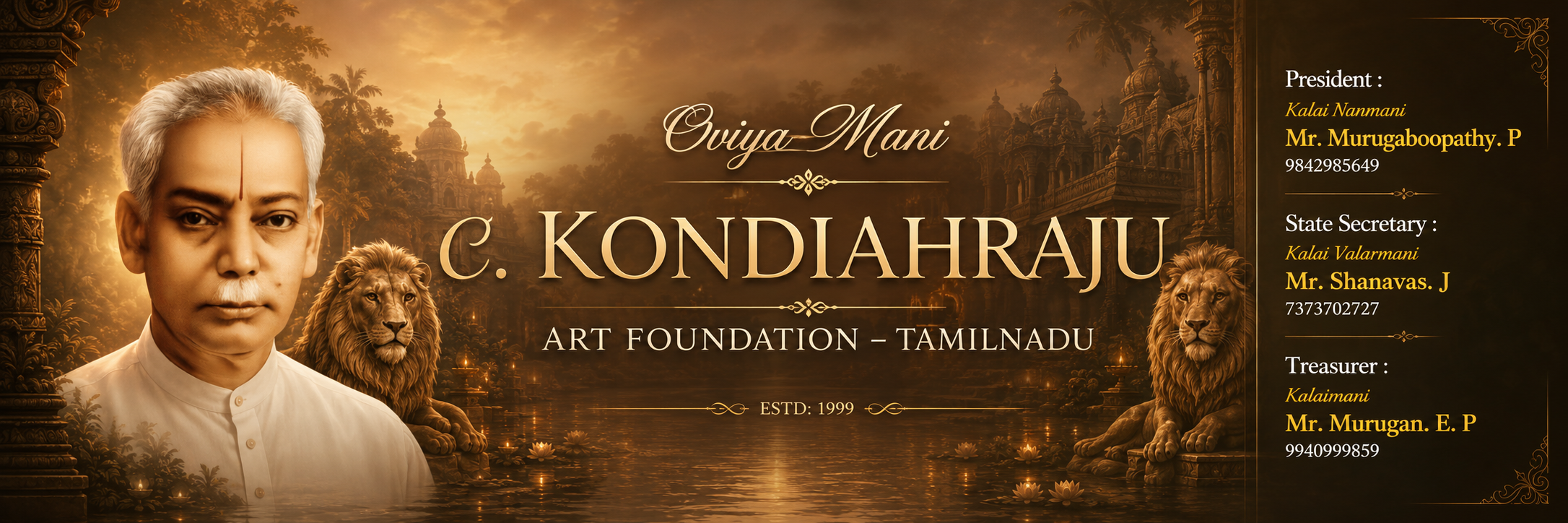
 Kondiahraju Art Foundation
C. Kondiah Raju’s mastery of calendar art is rooted in several key factors that allowed him to capture the imagination of millions and become a household name, especially in South India.
- Unique Amalgamation of Styles: Unlike many contemporaries who leaned heavily on Western academic styles (like Raja Ravi Varma), Kondiah Raju skillfully blended contemporary calendar art techniques with deeply traditional South Indian painting styles. His art maintained the iconic, formal representation of deities reminiscent of temple art and Tanjore paintings, making his depictions instantly recognizable and spiritually resonant for the masses. He didn’t just paint gods; he painted their gods, in a style they understood and revered.
- Spiritual Depth and Authenticity: Kondiah Raju was known for his austere and spiritual lifestyle, leading many of his students to call him an “artist-saint.” This personal devotion translated directly into his art. His depictions of Hindu gods and goddesses conveyed a profound sense of divinity, peace, and benevolence. This spiritual authenticity made his prints more than just decorative items; they became objects of reverence in homes and shrines.
- Iconic and Relatable Imagery: His “Gajendra Moksham,” “Meenakshi Kalyanam,” and numerous other religious prints became the quintessential visual representation of these narratives for countless South Indians. For many, his art was how they visualized their deities, leaders, and cultural figures. This widespread adoption signifies his ability to create universally appealing and culturally relevant imagery.
- Strategic Use of Medium and Accessibility:
- He embraced the burgeoning lithographic printing presses in places like Sivakasi, which allowed for mass production and widespread distribution of his art. This made his work affordable and accessible to people from all walks of life, from grand temples to humble homes.
- He was also an innovator in using German tempera colors and later Camlin watercolours, which facilitated faster execution and adaptability to the demands of commercial printing.
- Focus on the Central Subject: In his paintings, Kondiah Raju masterfully emphasized the central deity or figure by providing them a well-lit, central, and prominent position. Surrounding elements like pillars and lamps were often relegated to a more static background, ensuring the viewer’s gaze remained on the main subject. This effective composition enhanced the impact and clarity of his devotional art.
- Prolific Output and Wide Reach: He painted for most of the major printers in Sivakasi and Madurai, and his works were also widely featured in Tamil magazines and “Deepavali malars” (special festival issues). This extensive reach ensured his art permeated every corner of society.
- Legacy of Mentorship (Devi Art Studio): Kondiah Raju established the “Devi Art Studio” in Kovilpatti, operating under the traditional gurukula system. He meticulously trained a generation of talented artists, including T. S. Subbaiah and Mu. Ramalingam, who themselves became masters. This not only ensured the continuation of his artistic style but also cemented his influence on the entire calendar art industry in the region. His students not only learned his techniques but also absorbed his dedication and vision.
In essence, C. Kondiah Raju’s mastery stemmed from his ability to fuse spiritual devotion with commercial viability, creating art that was both aesthetically pleasing and culturally deeply significant, making him an indispensable figure in the history of Indian calendar art.